
How to Match Gutter Capacity to Your Roof Pitch
When heavy storms roll through Round Rock and the surrounding areas, a dependable roofing system is your home's first line of defense. But even the highest-quality roof can't do its job properly without an effective way to direct water safely away from your foundation. That is where proper gutter sizing comes into play.
If you have a steep roof, you might have noticed that water sometimes sheets right over the edge of your gutters during a heavy downpour. This happens because the pitch of your roof directly impacts how fast and how forcefully rainwater flows off the shingles. At RTS Roofing LLC, we frequently help homeowners correct these drainage issues. Whether you are looking for standalone upgrades or planning a complete roof installation, understanding how to match your gutter capacity to your home's architecture is essential for long-term protection.
Today, we are diving into the mechanics of roof pitch, water volume, and why choosing the right seamless gutters matters more than you might think.
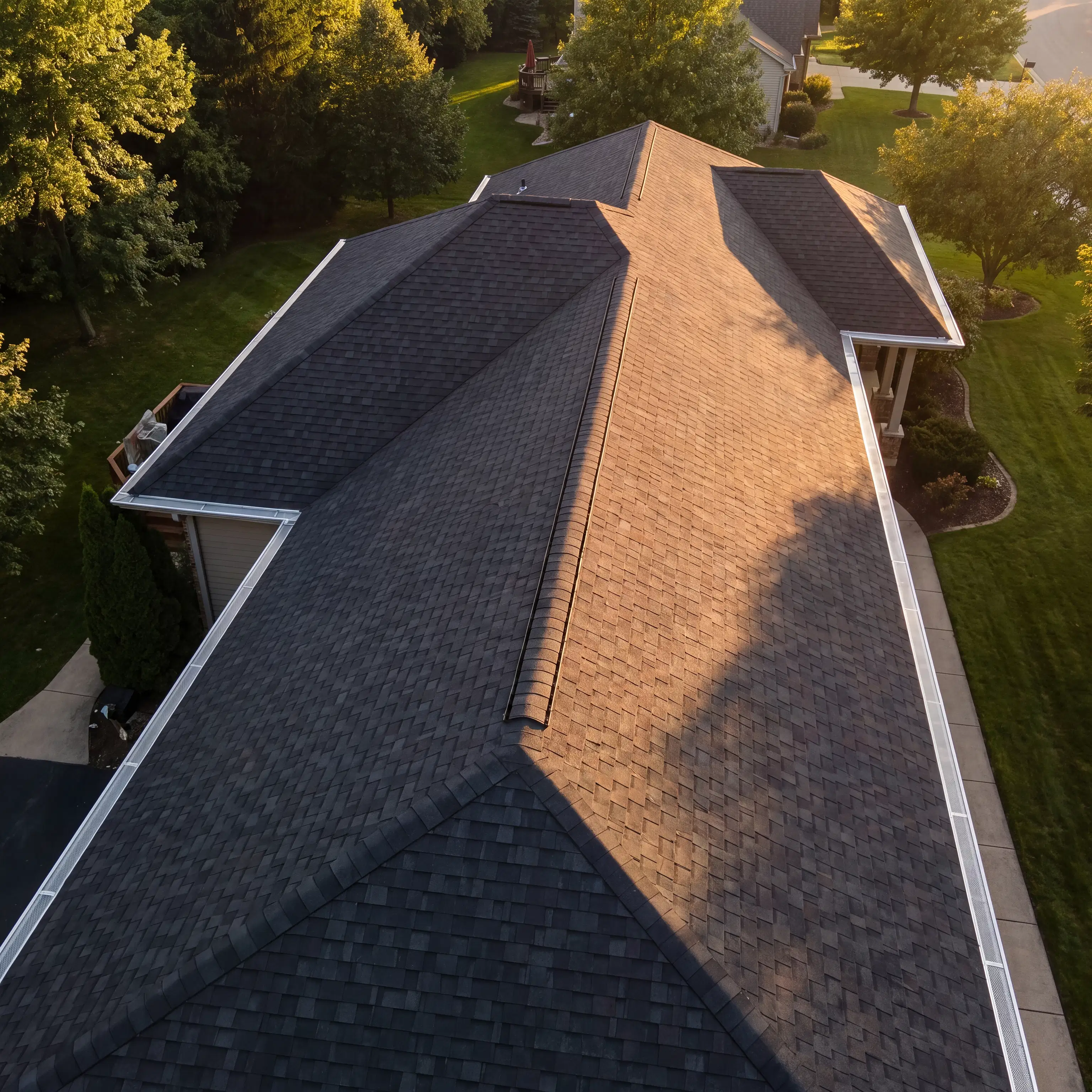
The Science of Roof Pitch and Water Flow
Roof pitch simply refers to the steepness of your roof. It is typically calculated by how many inches the roof rises vertically for every 12 inches it extends horizontally. A standard roof might have a 4/12 or 5/12 pitch, while steep roofs can easily reach 8/12, 10/12, or even higher.
Why does this matter for your gutters? The steeper your roof, the faster water travels down its surface. Gravity accelerates the runoff, meaning standard gutters often lack the width and depth to catch water moving at high velocities. Furthermore, steep roofs catch a larger amount of wind-driven rain compared to flatter roofs. When calculating gutter sizing for steep roof pitch, professionals must account for this extra surface area and the increased speed of the runoff.
If the gutters are too small, water will overshoot the trough, leading to pooling around your foundation, soil erosion, and potential water damage to your fascia and exterior walls. Upgrading to the correct capacity is an affordable roofing improvement that saves you from costly structural repairs down the line.
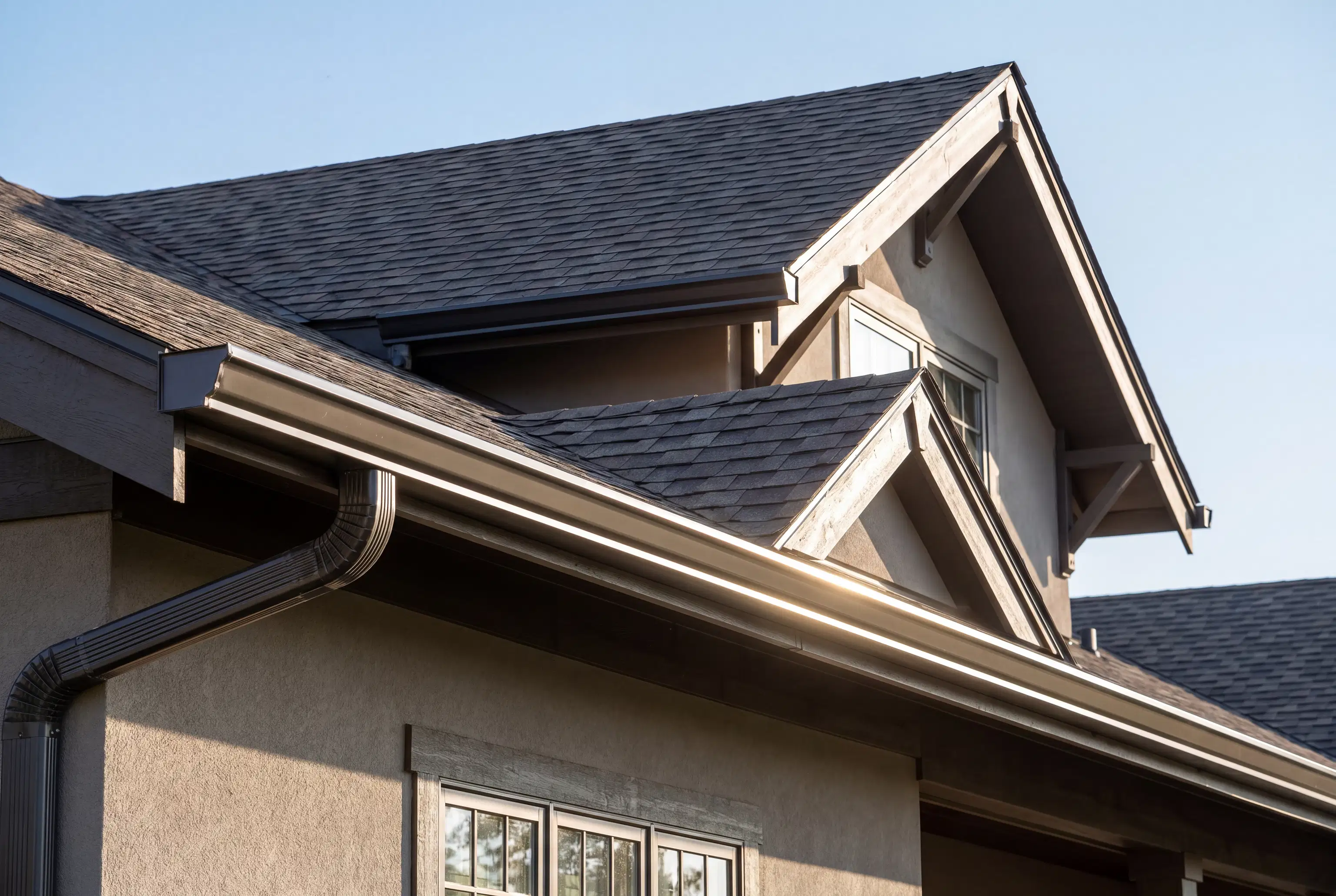
The Great Debate: 5 Inch vs 6 Inch Seamless Gutters High Volume Rain
For decades, 5-inch gutters were the industry standard for most residential properties. They work perfectly fine for moderate climates and low-to-medium pitched roofs. However, as extreme weather events become more common, many homeowners are re-evaluating their exterior drainage systems.
When comparing 5 inch vs 6 inch seamless gutters high volume rain performance, the difference is substantial. A 6-inch gutter is only an inch wider, but it holds nearly double the volume of water as a 5-inch gutter. That extra inch provides a significantly larger target for fast-moving water coming off a steep roof, virtually eliminating the problem of overshoot.
Additionally, 6-inch seamless gutters accommodate larger 3x4 inch downspouts. A larger downspout allows water to drain out of the gutter trough much faster, which is critical during the intense, fast-dropping storms we frequently see here in the Hill Country. For homes with expansive or very steep rooflines, making the jump to a 6-inch system is one of the smartest investments y'all can make to protect your property.
Preventing Gutter Overflow on Steep Residential Roofs
Proper sizing is the foundation of good drainage, but it is only part of the equation. Preventing gutter overflow on steep residential roofs also requires precision installation and regular maintenance.
First, the gutters must be positioned at the correct angle just below the roofline. If they are hung too high, sliding snow or heavy runoff can tear them right off the fascia board. If they are hung too low, the water will fly right over them.
Second, the slope (or pitch) of the gutters themselves must be perfectly calibrated. Gutters need a slight downward slant toward the downspouts so water flows efficiently without pooling. A standard rule is a quarter-inch drop for every ten feet of gutter. RTS Roofing LLC's in-house trained crews use meticulous measurement techniques to ensure this slope is flawless, preventing standing water that can attract mosquitoes or cause the metal to sag over time.
Finally, keeping your seamless gutters clear of leaves, twigs, and debris is vital. Even the highest-capacity 6-inch gutter will overflow if the downspouts are clogged with oak leaves. Routine cleanings, or installing high-quality leaf guards, will ensure your roofing services perform at their peak year-round.
Trust RTS Roofing LLC for Your Exterior Needs
Your roof and your gutters are designed to work together as a unified system. If you are experiencing overflowing gutters, washed-out landscaping, or water marks on your siding, it is time to have a professional evaluate your home's exterior drainage.
Whether you need a specialized capacity assessment for your steep roof or you are ready for a comprehensive roof replacement, our team is here to provide durable, high-quality solutions tailored to Texas weather. We pride ourselves on transparent pricing, exceptional workmanship, and protecting the community we live in.
Ready to safeguard your home against the next heavy downpour? Reach out to RTS Roofing LLC today. Visit our contact us page to schedule a thorough inspection, and let us help you find the perfect fit for your home.