Choosing Between Single-Ply Commercial Roofing Systems
When managing a commercial facility in Round Rock and the greater Central Texas area, protecting your building from our famously unpredictable weather is a top priority. Between the scorching summer sun and sudden, severe hailstorms, your building's exterior takes a constant beating. For many property managers and business owners, finding the right balance of durability, energy efficiency, and cost-effectiveness can feel overwhelming.
One of the most effective solutions on the market today is the single-ply membrane. However, when it comes time for a commercial flat roof replacement materials comparison, you will quickly find that not all membranes are created equal. The industry primarily relies on three main options: TPO, EPDM, and PVC. Each material offers distinct advantages depending on your building's specific needs, your budget, and the daily operations happening beneath the ceiling.
Whether you are looking to lower cooling costs during the relentless summer heat or need a material that can withstand chemical exhaust from a restaurant kitchen, understanding the differences between these systems is crucial. Let us break down everything you need to know about TPO vs EPDM vs PVC commercial roofing so you can make an informed, confident decision for your property.
TPO: The Best Single Ply Roofing Membrane for Heat
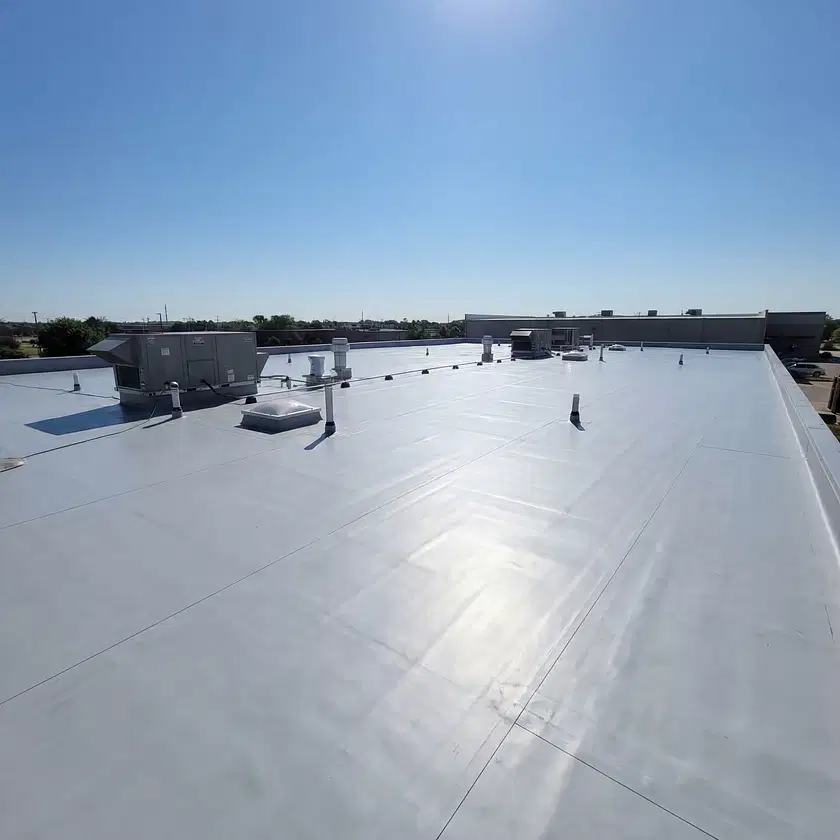
Thermoplastic Polyolefin, commonly known as TPO, has rapidly become one of the most popular choices for modern roofing services, and it is easy to see why when you live in Texas. A major trend in the construction industry right now is a shift toward sustainability and energy efficiency, and TPO fits perfectly into this movement.
Because TPO is manufactured in bright white, it acts as a highly effective cool roof system. It reflects ultraviolet rays and radiant heat away from your building rather than absorbing them. This solar reflective capability can dramatically reduce the strain on your commercial HVAC systems, leading to lower energy bills during those long, hot months. When local business owners ask us about the most energy-efficient option to beat the heat, TPO is frequently our top recommendation.
Beyond energy efficiency, TPO is highly resistant to tears, impacts, and the kind of wind uplift we often see during strong spring storms. The seams are hot-air welded together, creating a monolithic, watertight bond that is incredibly resilient. For business owners worried about supply chain delays and the fluctuating costs of materials, TPO often strikes the perfect balance between high-end performance and budget-friendly pricing.
EPDM: Time-Tested Durability
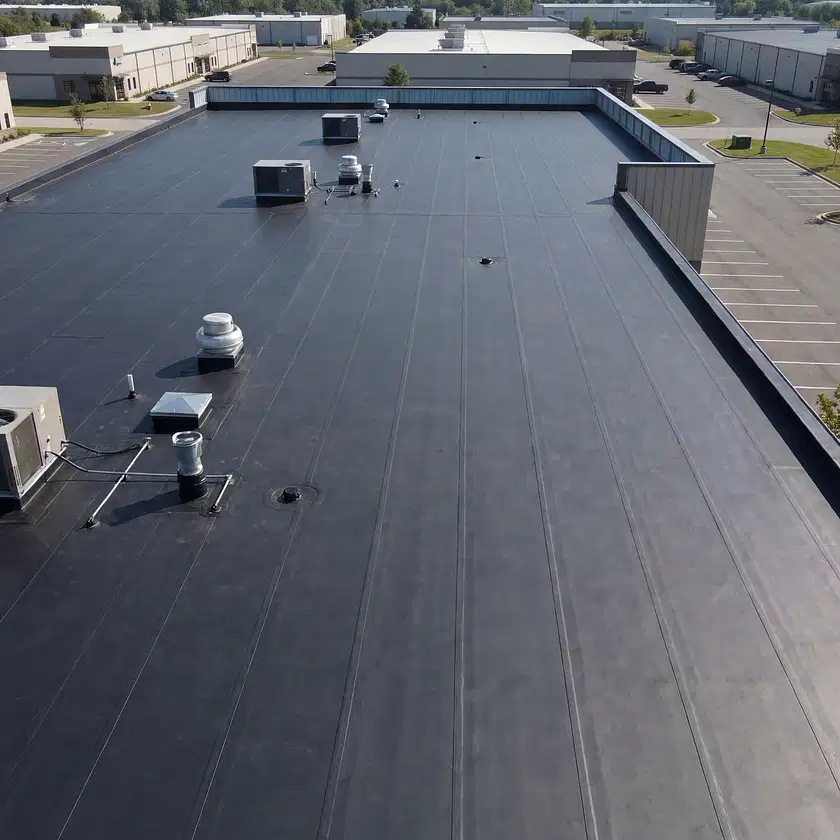
Ethylene Propylene Diene Terpolymer, or EPDM, is a synthetic rubber membrane that has been a staple for roofing companies for decades. If you have ever looked out over a commercial district and seen sprawling, flat black roofs, you were likely looking at EPDM.
One of the biggest advantages of an EPDM system is its sheer longevity and durability. It handles extreme temperature fluctuations exceptionally well, expanding and contracting without cracking or splitting. It is also highly resistant to hail, which is a major pain point for property managers navigating storm damage and complicated insurance claims. Because it has been around for so long, the installation methods are highly standardized, making it a very reliable choice.
While EPDM is traditionally black (which can absorb heat), modern manufacturing now offers white EPDM or reflective coatings to help offset temperature gains. Even so, if your primary goal is finding the absolute highest solar reflectance, you might lean toward TPO or PVC. However, if your focus is on a time-tested, rugged material that can withstand years of structural settling and severe weather, EPDM remains a formidable contender.
PVC: Unmatched Chemical and Fire Resistance
Polyvinyl Chloride (PVC) is another thermoplastic membrane similar to TPO, with hot-air welded seams that provide exceptional waterproofing. However, PVC stands out in a few highly specific, yet critical, areas.
If you manage a restaurant, a food processing facility, or an industrial manufacturing plant, PVC is often the superior choice. Animal fats, greases, and certain industrial chemicals can degrade standard rubber or TPO membranes over time. PVC is highly resistant to these harsh substances, ensuring your roof does not prematurely fail due to the exhaust coming out of your ventilation systems.
Additionally, PVC boasts incredible fire resistance. It is highly difficult to ignite and will actually self-extinguish once the source of the flame is removed. While PVC tends to be slightly more expensive upfront than TPO or EPDM, the long-term protection it offers for specialized commercial properties makes it a highly valuable investment.
The Installation Process and Protecting Your Investment
Choosing the right material is only half the battle; the quality of the installation is what truly determines how long your new roof will last. At RTS Roofing LLC, our comprehensive roof replacement process is designed to eliminate surprises and ensure a flawless application.
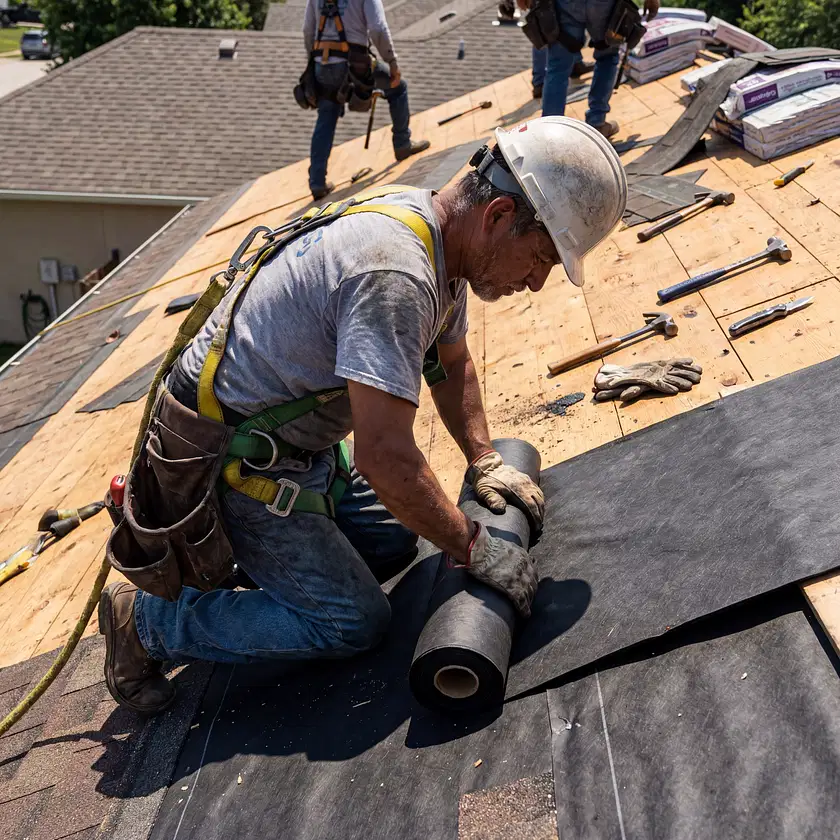
Before any new membrane is laid down, we utilize modern technology, including drone inspections, to get an incredibly accurate assessment of your building. Once the old material is removed, we perform a thorough deck inspection to catch any hidden structural failures or moisture issues. This step is critical to preventing premature failures down the line. We also prioritize safety and regulatory compliance, adhering strictly to OSHA fall-protection standards so you never have to worry about liabilities on your property.
Because a new commercial roof is a major financial commitment, you need to know your investment is secure. We provide robust warranty options that cover both the manufacturer's materials—often lasting up to 50 years and prorated based on usage—as well as a dedicated workmanship warranty. Our crews undergo rigorous, in-house training programs that have even been recognized by manufacturers, ensuring that every seam, flashing, and edge detail is executed perfectly.
Making the Right Choice for Your Facility
Deciding between TPO, EPDM, and PVC comes down to evaluating your specific operational needs, your energy goals, and your budget. Whether you want to reflect the relentless summer sun, defend against severe hail, or protect your building from restaurant grease exhaust, there is a single-ply system engineered for the job.
Navigating these options does not have to be a guessing game. Partnering with experienced professionals ensures that your unique pain points are addressed and that the installation is handled with the highest level of craftsmanship. We are proud to bring a Texas-sized commitment to quality to every job we take on in the Hill Country.
If you are ready to upgrade your facility's protection, reach out to RTS Roofing LLC today. Explore our commercial roofing options, and let us help you find the perfect system to keep your business safe, efficient, and running smoothly for decades to come.